
Why Trust Is Becoming the New Ranking Factor in AI Search
The way people discover information online is changing rapidly. With the rise of AI-powered search experiences, users are no longer just clicking blue links—they are receiving synthesized answers. This shift is forcing a fundamental question:
How do AI systems decide which brands, websites, and sources to trust and recommend?
The answer increasingly points to one core concept: trust.
From Rankings to Recommendations
Traditional search engines relied heavily on ranking signals—keywords, backlinks, and on-page optimization—to determine which pages appear at the top.
AI-driven search, however, operates differently.
Instead of presenting a list of results, AI systems:
- Analyze multiple sources
- Extract key information
- Synthesize answers
- Recommend brands or references within responses
This means your website is no longer just competing for rankings—it is competing to be selected, cited, and trusted.
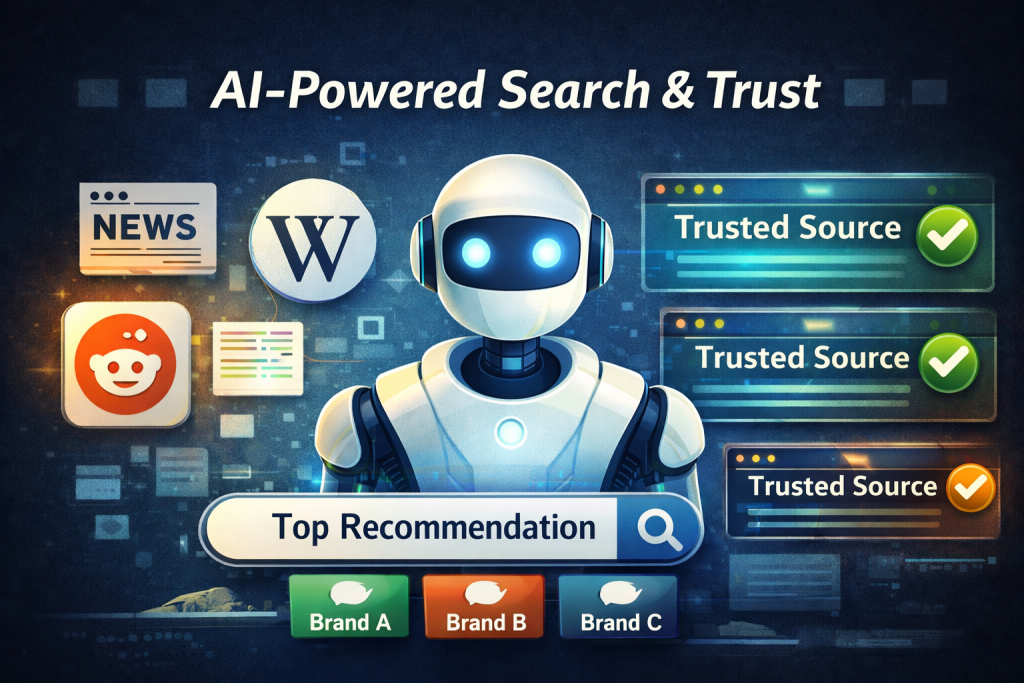
Trust: The Core Signal Behind AI Decisions
AI models are trained on vast datasets that include:
- Authoritative websites
- News publications
- Forums like Reddit
- Knowledge bases like Wikipedia
When generating answers, AI systems tend to rely on sources that demonstrate:
- Consistency
- Authority
- Credibility
- Relevance
In other words, AI doesn’t “rank” your site—it evaluates whether your content is trustworthy enough to include in its answer.
Why Links Still Matter in AI SEO
There is a growing misconception that links are becoming obsolete in the age of AI. That assumption is flawed.
Links still play a crucial role because they:
- Signal authority and credibility
- Help content get discovered and indexed
- Act as references across the web
From an AI perspective, links are part of a broader trust ecosystem.
As someone with over 15 years in SEO and link building, I’ve seen how authority is built over time. Today, AI systems are essentially doing what search engines have always done—relying on signals from trusted sources.
Whether it’s a mention on a news site, a discussion on Reddit, or a citation on an authoritative blog, these signals contribute to how AI evaluates your brand.
The Evolution of Authority in SEO
Authority is no longer just about domain metrics or the number of backlinks.
It now includes:
- Brand mentions across the web
- Consistent publishing of high-quality content
- Recognition within your niche
- Real-world credibility
AI systems are increasingly capable of identifying patterns:
- Which brands are frequently referenced
- Which authors consistently provide accurate information
- Which sources are trusted across multiple platforms
This means building a brand is now as important as building links.
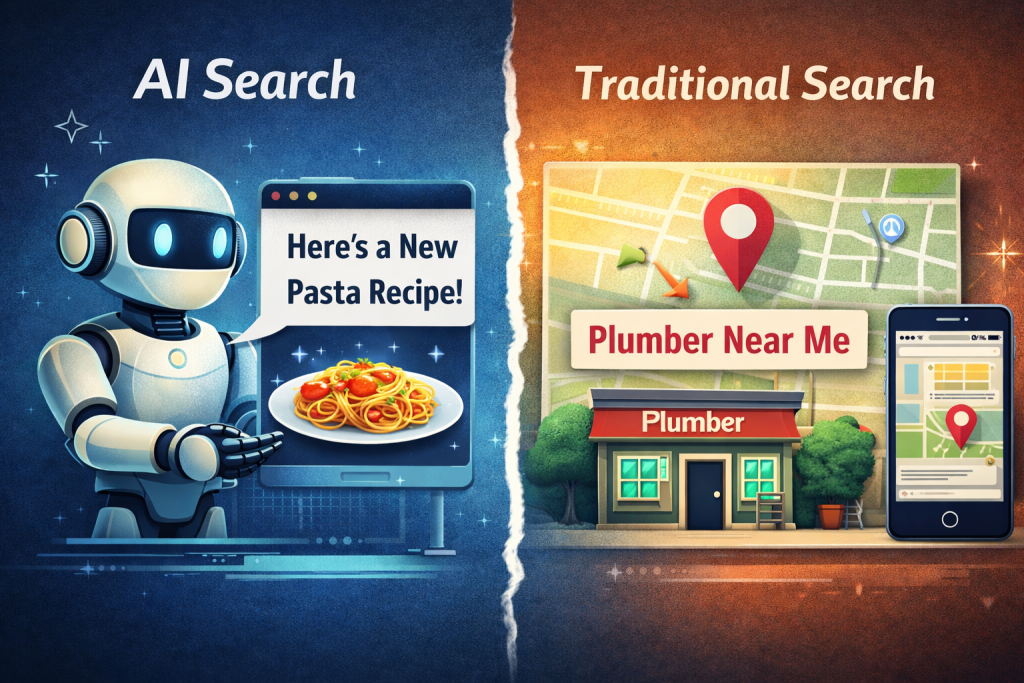
AI Search vs Traditional Search: Coexistence, Not Replacement
There’s a tendency to view AI as a replacement for traditional search. In reality, both will coexist.
For example:
- If someone wants a creative answer (e.g., a new recipe idea), AI tools are ideal
- If someone wants a service provider (e.g., a plumber or local business), traditional search still dominates
This distinction is important.
Local and transactional searches still rely heavily on:
- Google Business Profiles
- Local SEO signals
- Reviews and proximity
AI may assist in discovery, but intent-driven searches will continue to favor traditional search engines.
What This Means for SEO Professionals and Businesses
The shift toward AI-driven discovery doesn’t eliminate SEO—it expands it.
To remain competitive, businesses need to focus on:
1. Building Trust Signals
- Earn mentions from authoritative sites
- Maintain consistent branding
- Showcase expertise clearly
2. Creating High-Quality, Structured Content
AI systems prefer content that is:
- Clear and well-organized
- Informative and factual
- Easy to extract and summarize
3. Demonstrating Real Expertise (EEAT)
Experience, Expertise, Authority, and Trust are no longer optional—they are foundational.
This includes:
- Sharing real insights
- Publishing case studies
- Demonstrating hands-on experience
4. Expanding Beyond Your Website
Your brand’s presence across the web matters more than ever.
This includes:
- Forums
- Social platforms
- Industry publications
The Role of Content in AI Visibility
Content is still central—but the type of content that works is evolving.
Instead of writing purely for rankings, the focus should be on:
- Answering real questions
- Providing unique insights
- Offering clarity and depth
AI systems are designed to identify content that adds value, not just content that is optimized.
A Practical Perspective from 15 Years in SEO
From my experience in SEO and link building, one thing remains constant:
Search evolves, but the fundamentals stay the same.
- Authority still matters
- Links still matter
- Relevance still matters
What’s changing is how these signals are interpreted.
AI is not replacing SEO—it is refining it.
It is pushing the industry toward:
- Authenticity
- Expertise
- Trustworthiness
And those who have been building real authority all along are already ahead.
The Future of SEO: Trust-Led Optimization
Looking ahead, SEO will increasingly revolve around trust.
This means:
- Becoming a recognized voice in your niche
- Building a consistent content presence
- Earning mentions across trusted platforms
Rather than chasing algorithms, the focus should shift to building a brand that both users and AI systems trust.
Final Thoughts
AI is transforming how information is discovered and consumed, but it is not rewriting the core principles of SEO.
Instead, it is reinforcing them.
In a world where AI curates answers instead of listing results, the question is no longer:
“How do I rank?”
It is:
“Why should I be trusted?”
And the businesses that can answer that question effectively will be the ones that continue to grow—regardless of how search evolves.