
Unlocking AI for SEO: Boost Your Rankings Effortlessly
Unlock the power of AI to effortlessly boost your SEO rankings. Discover strategies that transform data into actionable insights for maximum visibility. See how AI for SEO can work it’s magic!
How AI is Changing the SEO Landscape
Artificial Intelligence (AI) is rapidly transforming the SEO landscape, making it more efficient and effective. Traditional SEO practices often relied on manual efforts and guesswork, but AI introduces automation and data-driven insights. This shift allows marketers to predict trends, understand user behavior, and optimize content more precisely. AI algorithms can analyze vast amounts of data in real-time, identifying patterns that humans might miss. This ability to process and interpret data quickly means that SEO strategies can be adjusted on the fly, ensuring that businesses stay ahead of the competition.
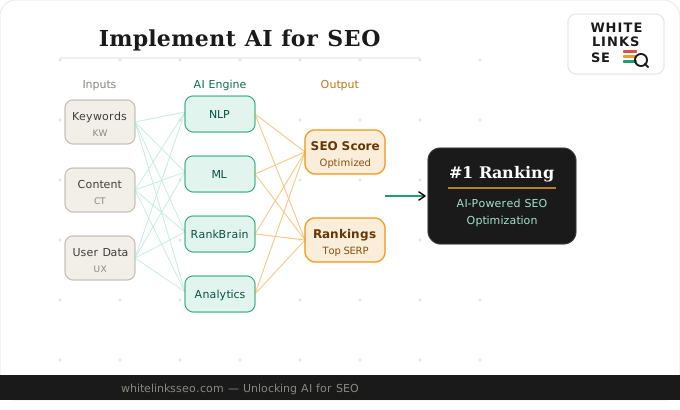
Moreover, AI is enhancing the way search engines operate. Google’s RankBrain, for example, is an AI system that helps process search queries, learning from user interactions to deliver more relevant results. This makes it crucial for businesses to optimize their content for AI-driven algorithms. Understanding how these systems interpret and rank content can significantly impact a website’s visibility. As AI continues to evolve, so too will its influence on SEO, making it essential for marketers to stay informed and adapt to these changes.
Another significant impact of AI on SEO is the personalization of search results. AI can analyze user data to deliver highly personalized content, improving the user experience and increasing engagement. This means that businesses must focus on creating content that not only ranks well but also resonates with their target audience. By leveraging AI, companies can gain deeper insights into their audience’s preferences and behaviors, allowing them to create more targeted and effective SEO strategies. The integration of AI in SEO is not just a trend but a fundamental shift that is reshaping the digital marketing landscape.
Benefits of Using AI for SEO
One of the primary benefits of using AI for SEO is the increased efficiency it offers. AI tools can automate repetitive tasks such as keyword research, content optimization, and performance monitoring. This automation frees up valuable time for marketers, allowing them to focus on more strategic initiatives. Additionally, AI can handle large volumes of data faster than any human, providing real-time insights that help businesses make informed decisions quickly. This speed and efficiency are crucial in the fast-paced digital world, where staying ahead of competitors can make all the difference.
Another significant advantage is the ability to gain deeper insights into user behavior. AI can analyze user interactions, search patterns, and engagement metrics to provide a comprehensive understanding of what users are looking for. This information is invaluable for creating content that meets user needs and expectations. By understanding user intent, businesses can optimize their content to align with what their audience is searching for, enhancing both visibility and relevance. Furthermore, AI can predict future trends based on historical data, allowing businesses to stay ahead of the curve and anticipate changes in user behavior.
AI also enhances the accuracy of SEO efforts. Traditional SEO involves a lot of trial and error, but AI reduces this uncertainty by providing data-driven recommendations. For example, AI-powered tools can identify the most effective keywords, suggest content improvements, and even predict the potential impact of changes. This precision helps businesses optimize their SEO strategies more effectively, leading to better results. By leveraging AI, companies can ensure that their SEO efforts are not only efficient but also highly accurate, maximizing their chances of success in the competitive online landscape.
Key AI Tools for SEO Optimization
Several AI tools have emerged as game-changers in the field of SEO optimization. One of the most popular is Google’s AI-driven tool, RankBrain, which enhances search query processing by understanding the context and semantics of user queries. This tool helps businesses optimize their content to match the intent behind search terms, improving their chances of ranking higher in search results. By leveraging RankBrain, businesses can ensure that their content is more relevant to what users are actually searching for, increasing their visibility and engagement.
Another essential AI tool for SEO is SEMrush, which offers a comprehensive suite of features designed to enhance search engine optimization. SEMrush uses AI to provide insights into keyword performance, competitor analysis, and backlink opportunities. It also offers content optimization suggestions based on real-time data, helping businesses improve their on-page SEO. With SEMrush, marketers can gain a competitive edge by making data-driven decisions that enhance their overall SEO strategy. The tool’s ability to analyze and interpret vast amounts of data makes it an invaluable asset for any business looking to improve its online presence.
Moz is another powerful AI tool that has revolutionized SEO optimization. Moz uses machine learning algorithms to provide accurate keyword research, site audits, and rank tracking. It also offers insights into domain authority and page authority, helping businesses understand how their website is performing relative to competitors. Moz’s AI-driven recommendations make it easier for marketers to identify areas for improvement and implement effective SEO strategies. By leveraging Moz, businesses can optimize their content, improve their search rankings, and ultimately drive more traffic to their website.
Understanding AI-Powered Keyword Research
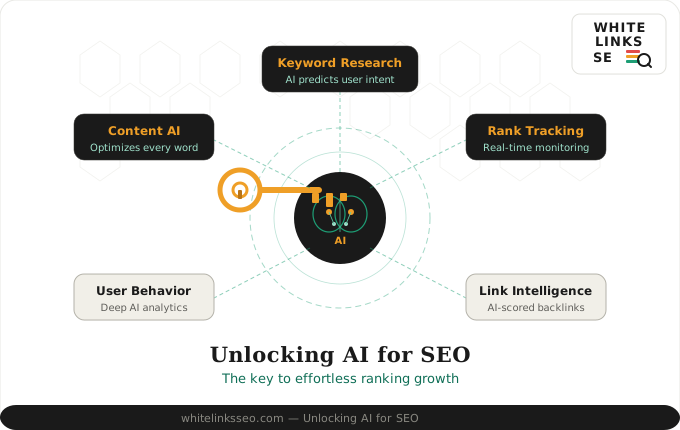
Keyword research is a fundamental aspect of SEO, and AI has significantly enhanced this process. Traditional keyword research often involved manually sifting through data to identify relevant keywords, but AI-powered tools automate this process, making it more efficient and accurate. AI algorithms can analyze vast amounts of search data, identifying patterns and trends that reveal the most effective keywords for a given topic. This allows businesses to target the right keywords with precision, increasing their chances of ranking higher in search results.
One of the key benefits of AI-powered keyword research is the ability to understand user intent. AI tools can analyze the context in which keywords are used, providing insights into what users are actually looking for. This understanding of user intent is crucial for creating content that meets the needs and expectations of your audience. By targeting keywords that align with user intent, businesses can improve their relevance and visibility in search results. This, in turn, enhances user engagement and drives more traffic to their website.
AI-powered keyword research also allows for more dynamic and adaptive SEO strategies. Unlike traditional methods, which often rely on static keyword lists, AI tools can continuously analyze and update keyword data in real-time. This means that businesses can stay ahead of changing trends and adjust their SEO strategies accordingly. By leveraging AI for keyword research, companies can ensure that their content remains relevant and competitive in the ever-evolving digital landscape. This adaptability is crucial for maintaining a strong online presence and achieving long-term SEO success.
Content Creation with AI: Best Practices
AI has opened new avenues for content creation, making the process more efficient and effective. One of the best practices for leveraging AI in content creation is to use AI-powered tools for generating topic ideas. Tools like HubSpot’s Content Strategy and MarketMuse can analyze your existing content and identify gaps or opportunities for new topics. These tools use AI to understand what your audience is interested in, providing data-driven recommendations for content creation. By leveraging these insights, businesses can create content that is not only relevant but also highly engaging.
Another best practice is to use AI for content optimization. AI tools like Grammarly and Hemingway can analyze your content for readability, grammar, and style, providing suggestions for improvement. These tools use natural language processing (NLP) to understand the nuances of your writing and ensure that it meets high-quality standards. By optimizing your content for readability and clarity, you can enhance user engagement and improve your chances of ranking higher in search results. Additionally, AI can help identify and incorporate relevant keywords, ensuring that your content is optimized for SEO.
AI can also assist in content personalization, which is crucial for enhancing user experience. Tools like Acrolinx and OneSpot use AI to analyze user behavior and preferences, allowing you to create personalized content that resonates with your audience. By delivering content that is tailored to individual user needs, you can increase engagement and build stronger relationships with your audience. Personalization also helps improve conversion rates, as users are more likely to take action when they feel that the content is relevant to them. By leveraging AI for content creation, businesses can ensure that their content is not only high-quality but also highly personalized.
AI and User Experience: Enhancing Engagement
AI plays a crucial role in enhancing user experience, which is a key factor in SEO success. One way AI enhances user experience is through personalized content recommendations. AI algorithms can analyze user behavior, preferences, and search history to deliver content that is tailored to individual users. This personalization makes the user experience more engaging and relevant, increasing the likelihood of users staying on your site longer and exploring more content. By providing a personalized experience, businesses can improve user satisfaction and build stronger relationships with their audience.
Another way AI enhances user experience is through chatbots and virtual assistants. These AI-powered tools can provide real-time assistance to users, answering questions, providing recommendations, and guiding users through their journey on your site. Chatbots can handle a wide range of tasks, from customer service inquiries to product recommendations, making the user experience more seamless and efficient. By providing instant support, businesses can reduce bounce rates and increase user engagement, ultimately improving their SEO performance.
AI also enhances user experience through predictive analytics. AI tools can analyze user data to predict future behavior and preferences, allowing businesses to anticipate user needs and deliver a more personalized experience. For example, AI can predict which products a user is likely to be interested in based on their browsing history, allowing businesses to tailor their marketing efforts accordingly. By leveraging predictive analytics, businesses can create a more proactive and engaging user experience, improving user satisfaction and driving more traffic to their site. Overall, AI is a powerful tool for enhancing user experience, which is essential for achieving SEO success.
Measuring SEO Success with AI Analytics
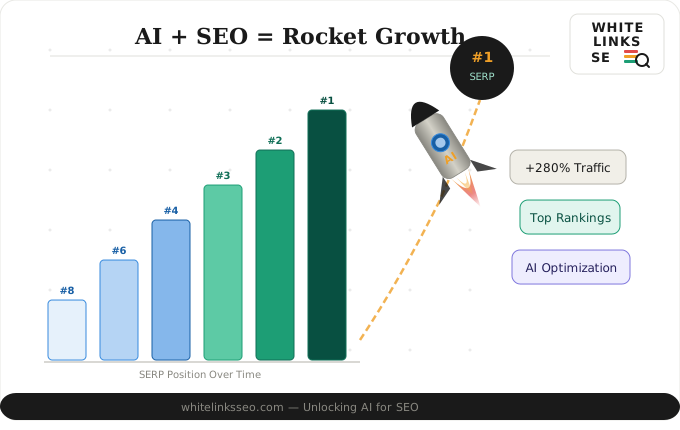
Measuring the success of SEO efforts is crucial for continuous improvement, and AI analytics provide a more accurate and efficient way to do this. Traditional analytics tools often require manual data interpretation, which can be time-consuming and prone to errors. In contrast, AI analytics tools like Google Analytics 360 and IBM Watson Analytics use machine learning algorithms to analyze data automatically and provide actionable insights. These tools can identify patterns, trends, and anomalies in your data, helping you understand what is working and what needs improvement.
One of the key benefits of AI analytics is the ability to track and measure user engagement more effectively. AI tools can analyze user behavior, such as time spent on page, click-through rates, and bounce rates, to provide a comprehensive understanding of how users interact with your site. This information is invaluable for optimizing your content and improving user experience. By understanding how users engage with your site, you can identify areas for improvement and implement changes that enhance user satisfaction and drive more traffic.
AI analytics also provide more accurate and detailed reporting. Traditional analytics tools often provide a high-level overview of performance metrics, but AI tools can drill down into the data to provide more granular insights. For example, AI can analyze the performance of individual keywords, pages, or content pieces, allowing you to understand what is driving traffic and conversions. This level of detail is crucial for making informed decisions and optimizing your SEO strategy. By leveraging AI analytics, businesses can measure their SEO success more accurately and efficiently, ensuring that their efforts are driving the desired results.
Future Trends: AI and SEO Integration
The integration of AI and SEO is set to become even more pronounced in the future, with several key trends emerging. One of the most significant trends is the increasing use of voice search. AI-powered voice assistants like Amazon’s Alexa, Google Assistant, and Apple’s Siri are becoming more popular, and this is changing the way people search for information. Voice search queries are often longer and more conversational, requiring businesses to optimize their content for natural language. By leveraging AI tools, businesses can analyze voice search data and adjust their SEO strategies to cater to this growing trend.
Another emerging trend is the use of AI for predictive SEO. Predictive SEO involves using AI algorithms to forecast future trends and user behavior, allowing businesses to stay ahead of the curve. For example, AI can analyze historical data to predict which keywords will become popular in the future, allowing businesses to optimize their content in advance. This proactive approach can give businesses a competitive edge, ensuring that they are always one step ahead of their competitors. Predictive SEO is set to become a crucial aspect of SEO strategy, making AI an indispensable tool for businesses.
AI is also set to play a more significant role in visual search. Visual search involves using images instead of text to search for information, and AI-powered tools like Google Lens are making this more accessible. By leveraging AI, businesses can optimize their visual content to ensure that it is easily discoverable through visual search. This includes using high-quality images, adding descriptive alt text, and ensuring that images are properly optimized for SEO. As visual search continues to grow in popularity, businesses that leverage AI for visual content optimization will have a significant advantage.
Conclusion: Embracing AI for SEO Success
The integration of AI into SEO represents a fundamental shift in the way businesses approach digital marketing. By leveraging AI, businesses can enhance their efficiency, gain deeper insights into user behavior, and create more targeted and personalized content. AI-powered tools provide accurate and actionable data, allowing businesses to optimize their SEO strategies more effectively. From keyword research to content creation to user experience, AI is transforming every aspect of SEO, making it more efficient and effective.
As AI continues to evolve, its impact on SEO will only grow. Businesses that embrace AI and stay ahead of emerging trends will be better positioned to achieve SEO success. By leveraging AI for predictive SEO, voice search optimization, and visual search, businesses can stay ahead of the competition and ensure that their content is always relevant and discoverable. The future of SEO is undoubtedly intertwined with AI, and businesses that recognize this and adapt accordingly will be well-positioned for long-term success.
In conclusion, embracing AI for SEO is not just a smart move; it is essential for staying competitive in the digital landscape. By leveraging AI, businesses can unlock new opportunities, enhance their SEO efforts, and achieve greater visibility and engagement. The benefits of AI for SEO are clear, and the time to embrace this technology is now. By integrating AI into your SEO strategy, you can boost your rankings effortlessly and achieve lasting success in the ever-evolving world of digital marketing.