
What Is the Difference Between Good and Bad Links?
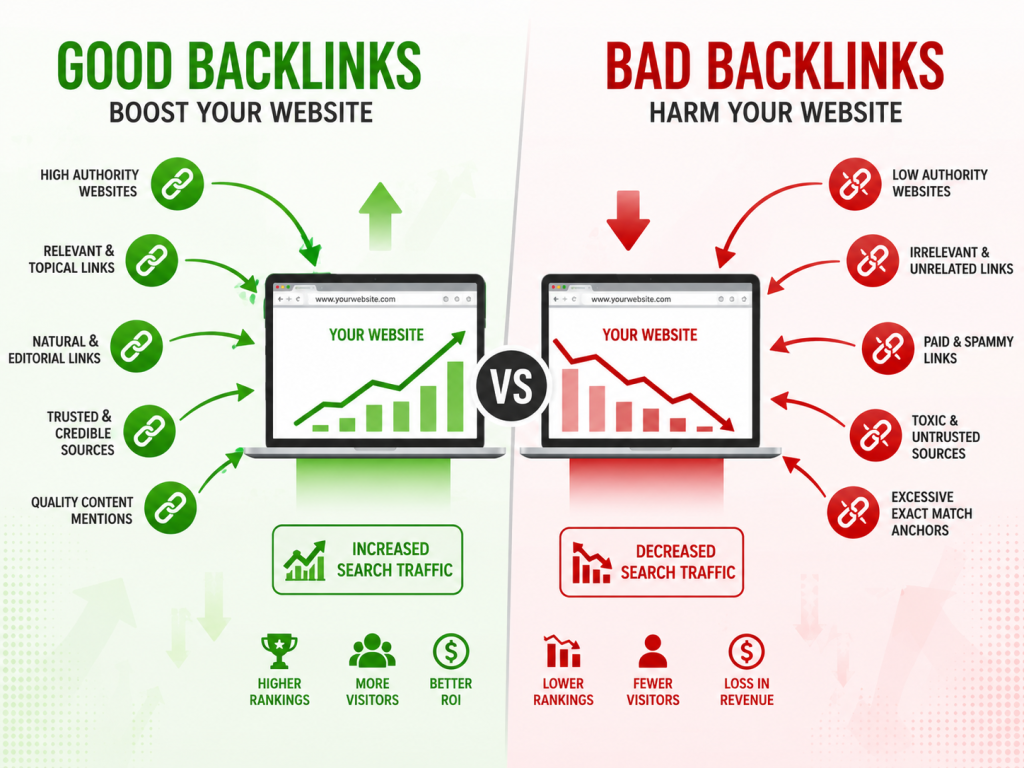
If you are trying to rank your small business website on Google, you have probably been bombarded with emails from agencies promising thousands of backlinks for a cheap price. It is incredibly tempting to think that search engine optimization is just a numbers game.
The truth is that the link-building industry is flooded with misinformation. There is a massive difference between a link that shoots your website to the top of Google and a link that gets your site penalized. In my fifteen years of experience as an SEO professional, I have seen exactly how good links build businesses and how bad links ruin them.
The Core Difference: Traffic and Consistency vs. Cheap Vanity Metrics
Many website owners rely entirely on third-party vanity metrics like Domain Authority or Domain Rating to judge a link. While these metrics can give you a baseline, they can also be easily manipulated by spammy tactics.
When I evaluate a backlink opportunity using tools like Semrush, I look much deeper. My ultimate litmus test is checking the website’s traffic. I want to see how much organic traffic the site gets and, more importantly, how consistent that traffic is over time.
A truly good link comes from a living, breathing website that Google already trusts. If a site has a steady, consistent stream of visitors month after month, Google is actively endorsing its content. When that site links to you, it passes genuine authority. A bad link, on the other hand, comes from a dead site with zero traffic, even if its artificial authority metrics look high on paper.
The Dangerous Myth of Quantity Over Quality
The absolute biggest mistake I see business owners make is falling into the “more is better” trap. They genuinely believe that getting 500 links a month will help them move ahead of their competitors faster than getting five or ten high-quality links.
Even established business owners with a solid online presence fall for this. They fall prey to low-cost SEO freelancers who are happy to be paid fifty dollars for two hundred links a month. These cheap packages are filled with toxic elements like automated social bookmarking, profile links, spammy directory listings, and Private Blog Networks.
Paying fifty dollars for hundreds of automated links is essentially paying to tank your own rankings. Google’s algorithms are incredibly smart. They easily spot these unnatural velocity spikes and low-quality sources, which can lead to your website being pushed down in the search results or removed entirely.
A Real-World Example: Cleaning Up Spam to Win on Page One
To understand how much bad links hold you back, you only have to look at what it takes to recover from them. When I first took on the SEO campaign for a premium agency client of mine, We Are Sweeter, their backlink profile was messy. They had a history of automated spam links pointing to their site, which was actively dragging down their organic performance.
The very first thing I had to do was submit a clean-up file through the Google Disavow Tool to force search engines to ignore those toxic spam links. Once the slate was clean, we shifted the entire strategy toward quality over quantity. I focused on building high-quality, in-content links from reputable guest blog sites.
The results speak for themselves. When we started working together, the site only had two keywords ranking on page one of Google, and their Domain Authority was sitting at a modest twenty. By consistently acquiring clean, authoritative, contextual links, their Domain Authority rose to thirty-one, and they now have eleven different keywords sitting proudly on page one. Quality always beats quantity over the long haul.
How to Place Good Links Naturally
A major part of making a link “good” is how it is integrated into the content. Google wants to see links that look completely natural and provide value to the reader.
When I publish a guest post on a high-quality site, I prefer to place two links per article. I never place links bluntly right at the top of the article. Forcing a link into the very first paragraph looks spammy to search engines and disruptive to readers.
Instead, the main contextual link should sit naturally within the body of the content after the topic has been properly introduced and explained. Then, I place a second supporting link toward the bottom of the article. This structure allows the content to build genuine relevance first, which passes the maximum amount of clean SEO value to your website.
The Budget Blueprint for Small Business Owners
If you are a small business owner with a tight marketing budget, you do not have to resort to cheap spam packages. You can build a clean link profile by spending your money strategically based on your current budget level.
What to Do with a One Hundred Dollar Monthly Budget
If your monthly SEO budget is around one hundred dollars, do not waste it on low-quality link packages. Instead, focus entirely on building your foundational links. This includes setting up your core business profiles and local directory foundations correctly. Use the rest of your resources to create helpful blog content directly on your own website. Building a strong content foundation yourself is the best way to prepare your site for future growth.
What to Do with a Three Hundred to Five Hundred Dollar Monthly Budget
If you have a budget of three hundred to five hundred dollars a month, you can start scaling up your efforts. Allocate this budget to hire a content writing team that can create authoritative blog posts for your audience. At this level, you can also hire a professional SEO team to manage your Google Business Profile to capture local search visibility and actively reach out to secure high-quality, high-authority links. This balanced approach of local optimization, content creation, and premium link building is the exact formula that drives sustainable organic traffic.